#Itsukushima Shrine
Tumblr posts tagged #Itsukushima Shrine from across Tumblr — no login required.


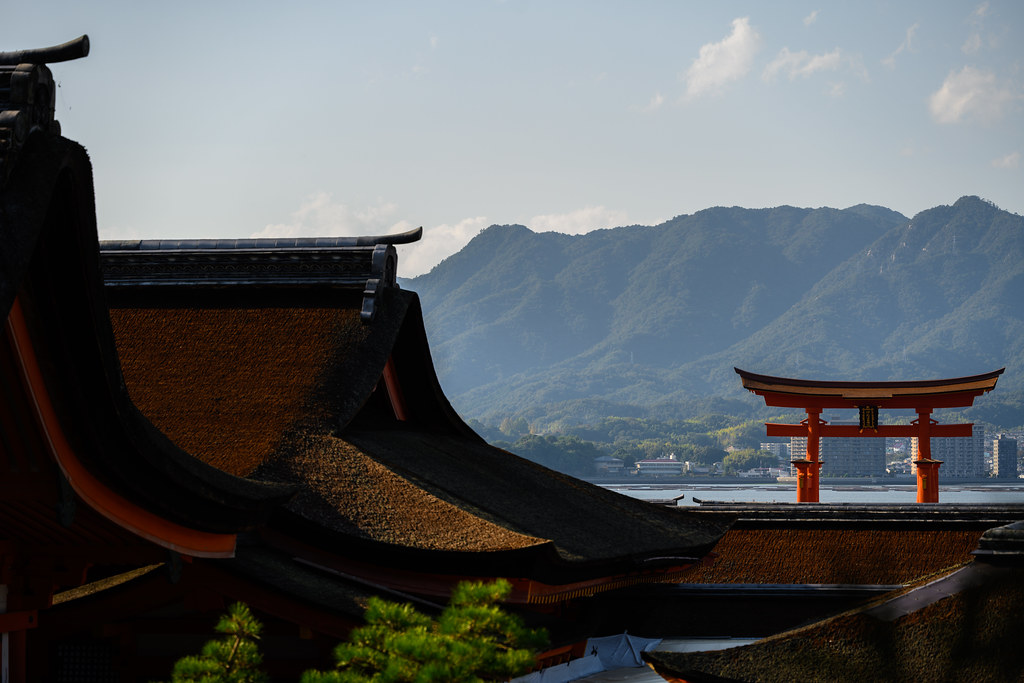
Chūgoku & Kinki Hiyoshi Taisha (Hie Taisha) ENSHRINED KAMI : Onamuchi (Omononushi) no kami and Oyamakui (Oyamagui) no kami, and others, collectively known as Hiei Sanno (“mountain king of Hiei”). PRAYERS OFFERED : Divine protection, especially in the years of danger (yakudoshi), and the well-being of the family. “Emperor Tenji invited the kami of Omiwa, Onamuchi (Omononushi) no kami, to be enshrined at Omiya on Mount Hiei in 668, in order the protect the capital that he briefly moved to nearby Otsu… the Kojiki names the kami of Mount Hiei as Oyamakui, “the great mountain peg”and the kami who “holds the humming arrow…“ same kami that is enshrined in Matsuo Taisha in Kyoto. At Hiyoshi Taisha he is enshrined in the eastern shrine. In 788 the monk Saicho founded a temple on the upper slope of the mountain… Over time, the court allowed Saicho support for monks whose sole purpose was to pray for the kami of Mount Hiei. Enryakuji thus came to hold sway over the shrine/temple complex that was to become one of the most influential in Japan. After Saicho’s death, Ennin and his successors increased the number of shrines first to seven, and then to twenty-one, by inviting more and more kami. …the sansei (Onamuchi, Oyamakui, and Hachiman), enshrined in Nishi hongu (old name: Omiya), Higashi hongu (old name: Ninomiya), and Usagu (old name: Shoshinshi). They were equated with the three main Buddhist deities of Enryakuji (Shakyamuni, Yakushi Nyorai, and Amida). However, at some point the identity of Oyamakui was obscured, and he came to be worshipped as Kuni no Tokotachi. After the Meiji period, the identity of Oyamakui as the original kami worshipped at Hie was reestablished, but the cosmology of the mountain was turned upside down, with the removal from the shrine of any Buddhist past…” —Pages 232-233 “The historical significance of worship at Hiyoshi Taisha is its combinatory character, called Sanno Shinto. From an early date, Buddhism sought to incorporate belief in kami into its theology and practice. Both Saicho and Kukai, the founder of Shingon Buddhism, worshipped native kami alongside Buddhas, adding impetus to the creation of a Japan-specific Buddhist theology… …Buddhism promised protection of the emperor in exchange for reverence. It added new strength to the emperor’s position as embodiment of the state with new theology, rituals, temples, and a well-educated clergy. It enlightened native kami and made them protectors of the Dharma. In this way, Buddhism subsumed the native deities and became one of the principal vehicles through which worship of kami flourished…” —Page 233 Itsukushima Jinja ENSHRINED KAMI : Ichikishimahime no mikoto, Tagorihime no mikoto, and Tagitsu-hime no mikoto. PRAYERS OFFERED : Safety at sea and success in business. “…The shrine itself is built entirely over a small inlet, with long covered corridors crisscrossing the shallow waters, leading from the main buildings to a number of auxiliary shrines and stages. Overall, the shrine consists of thirty-seven inner and nineteen outer shrine structures and is considered an outstanding example of the shinden-zukuri style of architecture that was prevalent in the Heian Period. The famous fifty-foot tall ryobu-style otorii (“great torii”), standing in the bay about five hundred feet in front of the shrine, is painted in bright vermillion, as are most of the structures…” —Page 235 “…One of these is the Marodo, enshrining the five male deities that were produced at the same time as the three female deities of the main shrine. All together, these kami are called the gonan sanjoshin ("five male/three female deities”) and they are the children created by the “trial by pledge” (ukei) between Susano-o and Amaterasu. One of the female deities, Ichikishima-hime, is associated with Benzaiten. Since the separation of Shinto and Buddhism Benzaiten worship has been centered at nearby Daiganji.” —Page 236 “…the Shingon temple Daiganji from 1203, considered one of the three most famous places dedicated to Benzaiten…famous for its connection to Tibetan Buddhism, and the Dalai Lama came here in 2006 as part of an eight-day tantric empowerment event. At that time, he consecrated the Maitreya Bodhisattva sculpture… This is also where the trail up to Mount Misen begins. Kobo Daishi began a style of meditation known as gumonji-ho (“morning star” meditation), which he undertook for a hundred days on Mount Misen, and he also lit a kiezu no hi (“eternal flame”). This same fire was used to lit the Hiroshima Peace Park in modern times.” —Page 236 “The shrine’s name is a derivation of “kami o itsuki matsuru shima”, meaning “island dedicated to the gods” (Itsukushima was also the name of the island until about 1950). It is said that after Taira no Kiyomori was placed in charge of Aki Province (part of present-day Hiroshima), he often visited the existing shrine and once had a dream of an old monk who told him that if he established a new shrine here, he would achieve control of the country… Taira no Kiyomori is known not only for building the shrine, but also for dedicating to the kami thirty-three scrolls of the Lotus, Amida, and Heart Sutras (called the heike nokyo), handwritten and decorated with silver, gold, and mother-of-pearl by himself and other members of his clan…” —Page 237




Shūsui Tea House at the Kyoto Imperial Gardens So this tea house is only open on specific days and hours, and I had been wanting to visit it for a while because it offers a neat view of the Itsukushima Shrine on the same pond. It also had a lot of gorgeous greenery, which is always a lovely sight to see. Also caught a cat napping on their grounds. A lot of shrines and buildings in the imperial palace area have cats to keep away mice and such. I also got this stunning photo of Itsukushima Shrine on the pond with the fall foliage And the surrounding area was lit up in gorgeous hues too.


About the #Itsukushima Shrine tag
What is the #Itsukushima Shrine tag on Tumblr?
#Itsukushima Shrine is a Tumblr tag people add to their posts so others can find related content. This page collects public posts tagged #Itsukushima Shrine from blogs across Tumblr so you can browse them in one place.
Can I browse #Itsukushima Shrine posts without a Tumblr account?
Yes. Zoomblr shows posts tagged #Itsukushima Shrine with no login or account required — just scroll the feed above. It's completely free.
How do I save an image from a #Itsukushima Shrine post?
Open the blog of any post you like via its link, then use Zoomblr's post viewer to download the image in full resolution.


